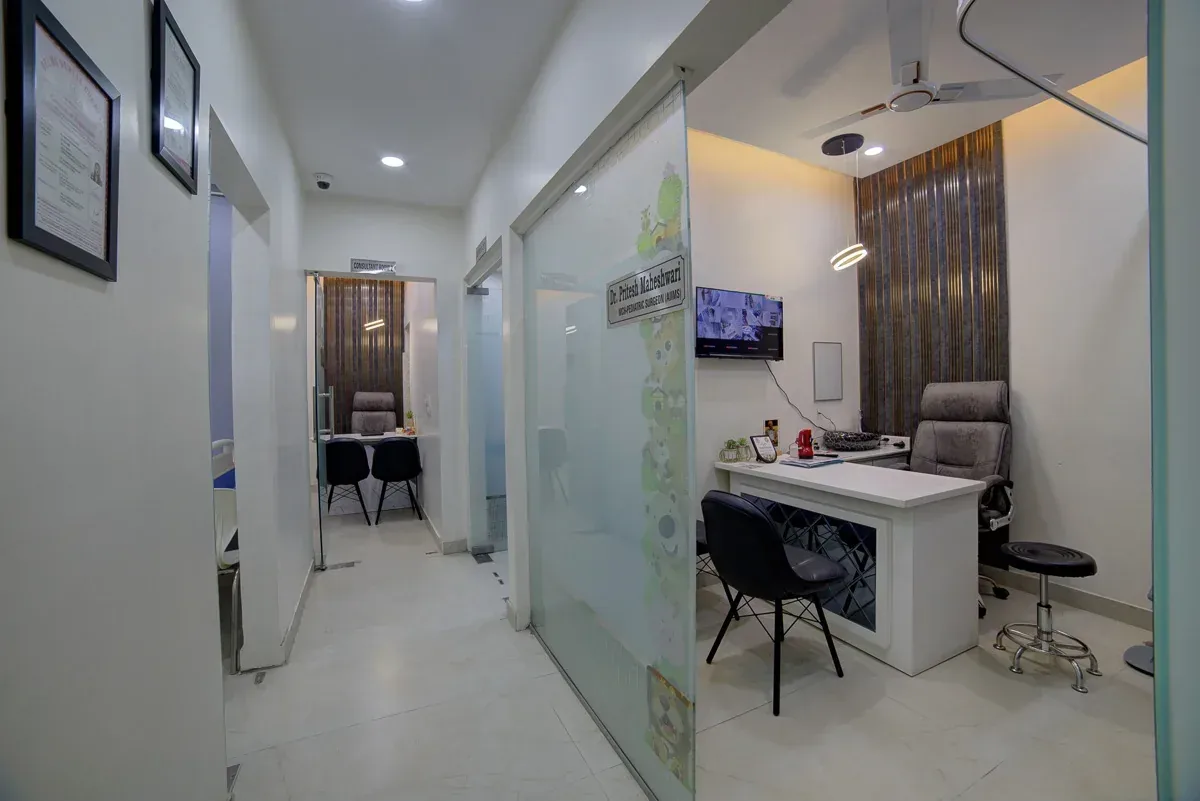
Worried about feeding, latching or speech? Dr. Pritesh Maheshwari, an AIIMS-trained paediatric surgeon in East Delhi, examines your child’s tongue, explains whether treatment is truly needed and performs tongue tie surgery only when it is likely to help.
A tight band of tissue under the tongue can make feeding hard work for a newborn and, later on, can make some sounds difficult for a child. It can also be something that never causes a problem at all. A careful assessment by a paediatric surgeon tells you which applies to your child.
Dr. Pritesh Maheshwari is a senior consultant paediatric surgeon and paediatric urologist with more than a decade of surgical experience and a special focus on newborns. At Maheshwari Multispeciality Clinic in Delhi, he assesses babies and children with a suspected tongue tie, works out whether the tie is really behind the symptoms, and offers tongue tie release (frenotomy) or frenuloplasty when surgery is the right step.
Tongue tie, medically called ankyloglossia, is a condition present at birth. The lingual frenulum, the strip of tissue that joins the underside of the tongue to the floor of the mouth, is shorter, thicker or tighter than usual, so the tongue cannot move as freely. When a child with tongue tie lifts or sticks out the tongue, the tip may look notched or heart-shaped.
It is most common in babies and sometimes runs in families. Studies estimate that it affects roughly 2 to 10 in every 100 children, with the wide range reflecting how differently the condition is defined.
Breastfeeding mothers may also notice sore nipples or painful, swollen breasts.
One point many parents find reassuring: tongue tie is not a cause of late talking. If your child is slow to start speaking, other causes are worth looking at.
No. Treatment is not usually needed when a tongue tie is not causing problems. In its 2024 clinical report, the American Academy of Pediatrics advised that babies with a tongue tie who are feeding normally need no intervention, and that frenotomy should be reserved for clear feeding difficulties where non-surgical support has not worked. It also advised against doing the procedure to prevent future speech problems.
That is the approach you can expect here. Feeding problems have many causes, and good feeding support sometimes solves them without any procedure. Surgery is recommended when the tie is clearly limiting function.
The tight frenulum is divided with sterile instruments so the tongue can move freely. In young babies it takes only a few minutes and is usually done without anaesthetic. Any bleeding is typically no more than a drop or two, and most babies can feed straight afterwards. In older babies and children, the release is usually done under general anaesthesia.
When the frenulum is too thick for a simple release, or more repair is needed, frenuloplasty may be recommended. It is a more extensive procedure performed under general anaesthesia, in which the tissue is released and then repaired with stitches. Tongue exercises may be advised afterwards to improve movement and reduce the chance of scarring.
A note on laser: the American Academy of Pediatrics found no evidence that laser works better than other release methods, so the technique is chosen for your child’s age and anatomy, not the equipment.
Dr. Pritesh checks how your child’s tongue lifts, extends and moves, and asks about feeding, weight gain or speech. You will hear whether treatment is needed, which option fits and why.
If surgery is advised, you receive clear instructions about the procedure, anaesthesia and preparation. When general anaesthesia is needed, tongue tie surgery is done as day care surgery, so your child goes home the same day.
You are told how to feed, what is normal while the area heals and when to call. A follow-up check confirms the tongue is moving well. Children with speech concerns may still benefit from speech therapy, as the tongue muscles need time to learn their new range of movement.
If you have noticed your child’s tongue does not move freely, an examination will give you a clear answer.
A senior consultant paediatric surgeon and paediatric urologist with more than a decade of surgical experience and a special focus on newborns.
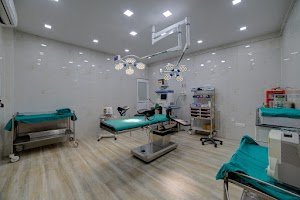











The clinic is a short trip from Laxmi Nagar, Preet Vihar, Geeta Colony, Shahdara, Vivek Vihar and nearby East Delhi neighbourhoods.
If feeding feels like a struggle or you have noticed your child’s tongue does not move freely, an examination will give you a clear answer. Call +91 76699 55995 or book online to see Dr. Pritesh Maheshwari in East Delhi.