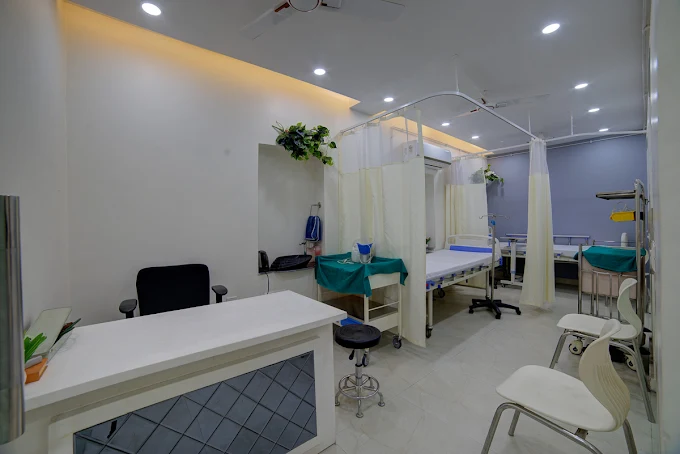
Planned surgery for your child does not always need an overnight stay. Dr. Pritesh Maheshwari, AIIMS-trained paediatric surgeon in East Delhi, assesses whether your child’s procedure can be done as day care surgery, and plans each step.
If your child has a groin or scrotal swelling that becomes hard, painful or will not go back, with vomiting or a swollen tummy, go to the nearest hospital emergency department now. After any operation, go straight to emergency if your child has trouble breathing, is very hard to wake, or is bleeding heavily.
Day care surgery means your child comes to hospital on the morning of a planned operation, has the procedure, recovers under supervision and goes home the same day. There is no overnight stay when recovery goes as expected.
Your child goes home only when the surgical and anaesthesia team are satisfied that it is safe. If recovery is slower, your child stays for observation, a normal part of safe care.
It takes place in a hospital operating theatre, usually under general anaesthesia, with a recovery area and admission available if needed.
These planned operations are often suitable for day care surgery. Whether your child’s can be done this way is decided after examination.
In selected children
That has not closed on its own
For a testis that can be felt
When it is causing a real problem
Infection around the nail that needs drainage or partial nail removal
Such as skin cysts and selected neck sinuses
Polydactyly and syndactyly, selected simple cases
Selected excisions
A camera check of the bladder
There is no single checklist, and the team weighs the child, the operation and home support together. Day care is usually suitable when:
Babies born prematurely have a higher risk of pauses in breathing after anaesthesia. UK anaesthesia guidance advises they are generally not treated as day cases until medically fit and about 60 weeks from the start of pregnancy.
Children with heart, lung or bleeding conditions or other complex needs may still have day care surgery after careful assessment. A cough, cold or fever close to the date can mean postponing until your child is well.
At the consultation Dr. Maheshwari confirms the diagnosis, explains the operation, its risks and alternatives, and tells you whether day care is the plan. Your child then has a pre-anaesthesia check covering medical conditions, medicines, allergies, earlier anaesthesia, bleeding tendency, snoring and recent illness.
Blood tests or scans are ordered only when your child’s history or the operation calls for them. Most healthy children having a short procedure need none.
Most children are admitted in the morning. The team checks details, consent and fasting, and the anaesthetist sees you again. Where the hospital allows, a parent stays until the child is asleep.
Your child is monitored throughout. A local anaesthetic is often added to numb the area, so waking is more comfortable. Afterwards your child is watched in recovery, then on the ward. Families usually spend most of the day at the hospital.
Your child is discharged when awake, breathing comfortably, drinking, and with pain under control on the planned medicines. You receive written instructions on medicines, wound care, bathing, school and play, and a number to call.
Give pain relief exactly as prescribed, and follow the advice on rest and activity.
The hospital will give you exact times to stop food, milk and clear drinks. Follow them closely. Do not stop drinks earlier than told, because a long fast leaves children thirsty and unsettled.
Talk to your child honestly about the day, bring all reports and medicines, and bring a second adult for the journey home if you can.
Your child may stay for observation because of pain that needs stronger medicines, repeated vomiting, slow waking from anaesthesia, bleeding or swelling, or an operation that took longer than expected.
In one Indian hospital study of 654 day care operations in children, about two in every hundred needed an unplanned overnight stay, mostly for pain, swelling or slow recovery from anaesthesia.
Some children are planned for an overnight stay from the start, such as young babies born early or children with complex medical needs.
Every operation and anaesthetic carries some risk. Possible problems include:
Serious anaesthetic problems in healthy children are rare but not impossible. Dr. Maheshwari and the anaesthetist will explain the risks for your child.
Dr. Pritesh consults at Maheshwari Multispeciality Clinic, D-11, Krishna Nagar Main Road, near Rattan Devi School, Delhi 110051. Day care operations are performed at partner hospitals in East Delhi and Delhi NCR. See all paediatric surgery services.
A fair estimate needs an examination first.
Ask for a written estimate that lists what is included and excluded, and how it changes if your child stays overnight. If you have health insurance, ask whether the procedure is covered as a day care procedure under your policy.
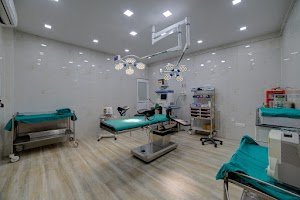











If your child has been advised a planned operation, book an assessment at our Delhi clinic to find out whether day care surgery suits them. For sudden pain, swelling or a child unwell after surgery, go to the nearest emergency department.
Bring all reports and medicines to the consultation.