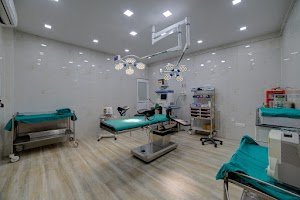
Laparoscopic appendicectomy
Removal of an inflamed appendix through small cuts. Children usually eat the same day and go home within one to two days if the appendix has not burst.
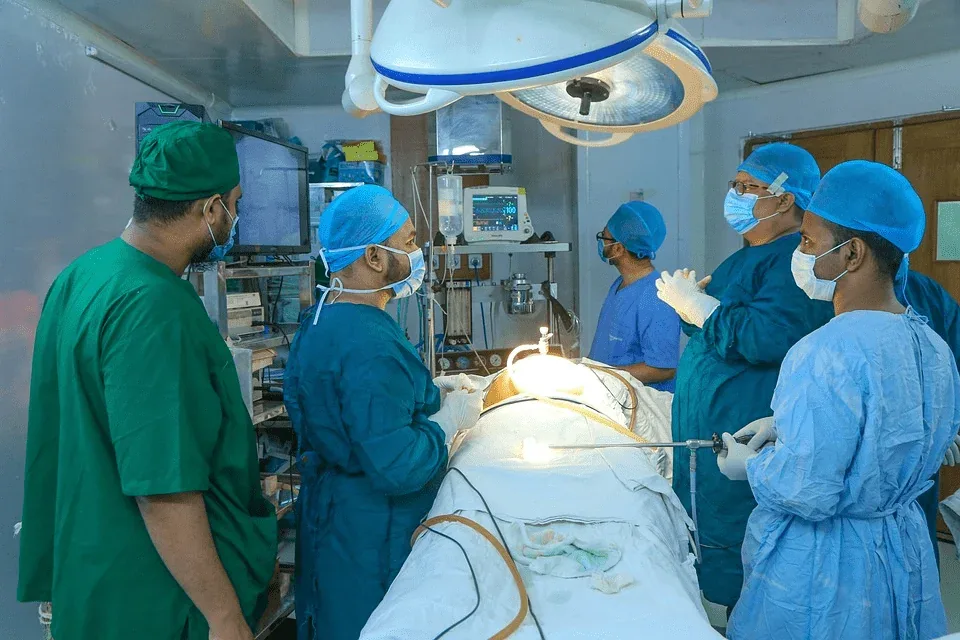
Keyhole surgery for babies and children with smaller scars, less pain and faster recovery, by Dr. Pritesh Maheshwari, AIIMS-trained Paediatric Surgeon in Delhi. Over 1,000 laparoscopic procedures performed, with many children going home the same day.
Performed through two or three openings of 3 to 5 mm, wherever keyhole surgery is the safest option for your child.
Removal of an inflamed appendix through small cuts. Children usually eat the same day and go home within one to two days if the appendix has not burst.
Keyhole repair of inguinal hernia in children, which also lets the surgeon check the other side for a hidden hernia during the same operation.
The best way to find and bring down a testicle that cannot be felt in the groin, often inside the tummy.
Repair of a blocked kidney drainage point (PUJ obstruction), so urine can flow freely and the kidney is protected.
Keyhole removal of a kidney that is no longer working and is causing infections or other problems.
Removal of the gallbladder in children with gallstones, a problem that is becoming more common in older children.
An operation for severe acid reflux that does not improve with medicines, done by keyhole surgery where suitable.
Keyhole chest surgery to remove lung cysts and masses, treat empyema and repair some diaphragm problems, without a large chest cut.
A camera look inside the tummy to find the cause of unexplained pain or other problems, and often treat it in the same sitting.
If your child has been told they need an operation for appendicitis, a hernia, an undescended testicle or a blocked kidney, one of your first questions is likely to be about the size of the cut. In many cases, it does not need to be large. Laparoscopic surgery lets Dr. Pritesh Maheshwari perform these operations through two or three openings of 3 to 5 mm, using a camera and fine instruments, so your child has less pain, smaller scars and a quicker return home.
Keyhole surgery in children is not simply adult surgery made smaller. A newborn’s tummy has very little working space, the tissues are delicate, and anaesthesia has to be matched to the child’s weight. Dr. Pritesh has performed more than 1,000 laparoscopic procedures, building on his MCh in Paediatric Surgery at AIIMS, New Delhi, where he was batch topper, and his years as Senior Resident at AIIMS and Chacha Nehru Bal Chikitsalaya.
Every child is assessed first to decide whether keyhole surgery is the safest option. When it is, many operations are planned as day care or a short stay at Kailash Deepak Hospital or Yashoda Hospital, Kaushambi, with consultations at our clinic in Delhi.
Tiny cuts heal into marks that are hard to see as your child grows.
Smaller wounds mean less pain after surgery and less need for strong pain medicines.
Many children go home the same day or the next day.
Most children are back to eating, playing and school sooner than after open surgery.
The magnified camera view helps the surgeon see and work with great precision.
Small cuts are less likely to get infected or open up.
Talk to Dr. Pritesh about whether laparoscopic surgery is right for your child. You will get a clear, honest answer.
Laparoscopic surgery is suitable for many children, including newborns, but it is not the best choice in every case. Sometimes open surgery is safer or gives a better result, for example in some very complex conditions or emergencies.
Dr. Pritesh looks at your child’s condition, age and general health, and recommends the approach that is safest for your child.
In a small number of cases, a keyhole operation may need to be changed to open surgery during the procedure, and he will explain this to you beforehand.
Call the clinic if you notice fever, increasing pain, redness or discharge from the wounds, or repeated vomiting.
Book a consultation at our Delhi clinic and find out if laparoscopic surgery is the right option.