01
Tracheo-oesophageal fistula and oesophageal atresia
The food pipe is not connected to the stomach and may join the windpipe. Babies froth at the mouth and choke on feeds. The food pipe is joined surgically in the first days of life.
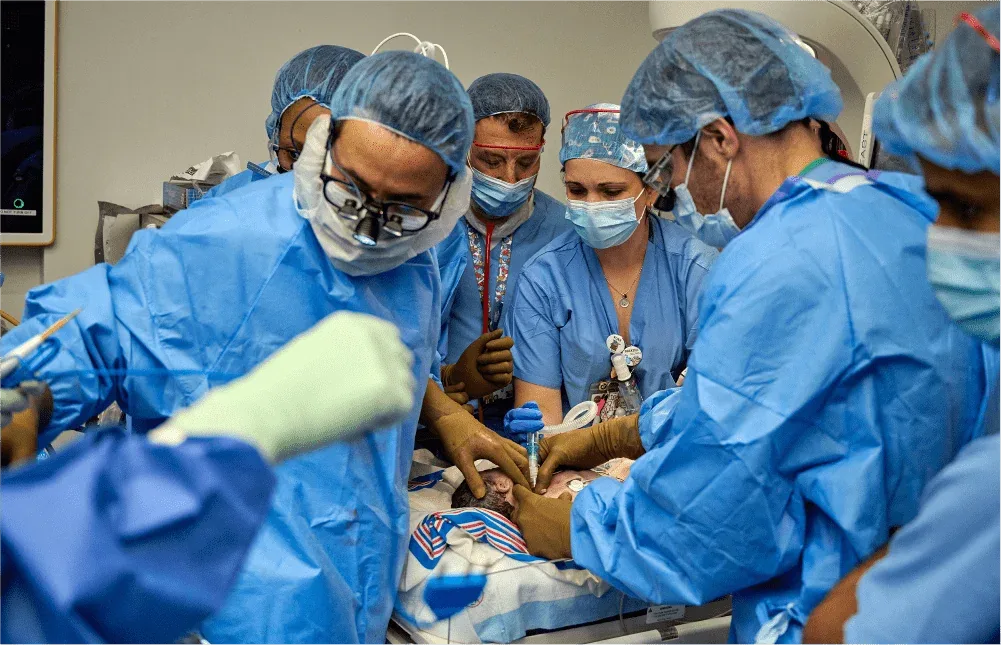
Specialist surgery for babies born with conditions of the food pipe, bowel, diaphragm and bile ducts, planned with your NICU team from the first scan to safe discharge. By Dr. Pritesh Maheshwari, AIIMS-trained Paediatric and Neonatal Surgeon, East Delhi.
Each condition is assessed with your neonatology team and treated at the right time for your baby.
The food pipe is not connected to the stomach and may join the windpipe. Babies froth at the mouth and choke on feeds. The food pipe is joined surgically in the first days of life.
A gap in the diaphragm lets the bowel move into the chest and press on the lungs. After the baby is stabilised in the NICU, the gap is closed and the bowel returned to the tummy.
A blockage or missing segment of the bowel causes green vomiting and a swollen tummy soon after birth. Surgery joins the healthy ends of the bowel so the baby can feed.
The bowel is not fixed in its normal position and can twist, cutting off its blood supply. Green vomiting in a newborn is an emergency, and timely surgery can save the bowel.
The back passage has not formed normally or is in the wrong place. Treatment may be done in one or more stages, depending on the type, to give the child the best chance of normal bowel control.
Missing nerve cells in part of the bowel stop stool from passing, causing a swollen tummy and severe constipation from birth. The affected segment is removed and the healthy bowel brought down.
Thickening of the muscle at the stomach outlet causes forceful, repeated vomiting in babies a few weeks old. A short operation, often by keyhole surgery, cures the problem.
Conditions of the bile ducts that cause jaundice lasting beyond two weeks, pale stools or dark urine. Early surgery is important to protect the liver.
Swollen kidneys or posterior urethral valves seen on pregnancy scans are assessed soon after birth and treated when needed.
Hearing that your newborn needs an operation is one of the most frightening moments a parent can face. It may come after a pregnancy scan shows a problem with the bowel or diaphragm, or in the first hours after birth, when a baby cannot feed, keeps vomiting green fluid, does not pass stool, or struggles to breathe. In these moments, what matters most is a calm, clear plan and a surgeon trained in newborn surgery.
Newborn surgery, also called neonatal surgery, is the most delicate part of children’s surgery. A baby may weigh only two or three kilograms, the organs are tiny, and the anaesthesia, fluids and temperature all need precise control. Good results depend on the surgeon working hand in hand with the neonatologists and NICU nurses who look after your baby before and after the operation.
Dr. Pritesh Maheshwari completed his MCh in Paediatric Surgery at AIIMS, New Delhi, as batch topper, and served as Senior Resident in Paediatric Surgery at AIIMS and Chacha Nehru Bal Chikitsalaya, two of Delhi’s leading centres for children’s surgery. He has performed more than 5,000 major surgeries over 15+ years, and today operates at Kailash Deepak Hospital and Yashoda Hospital, Kaushambi, with consultations at our clinic in Delhi.
Meet Dr. Pritesh before your baby is born to understand the condition and plan surgery, delivery and NICU care together.
Many conditions that need newborn surgery are now picked up on routine pregnancy scans. When this happens, an antenatal consultation with a paediatric surgeon can make a real difference. Dr. Pritesh reviews the scan reports, explains what the condition means, what surgery will be needed and when, and helps you plan delivery at a hospital with a NICU and paediatric surgery support. Parents who know what to expect are better prepared, and babies benefit from treatment without delay.
Contact your doctor or the nearest emergency department straight away if your newborn has:
+91 76699 55995Speak to Dr. Pritesh about your baby’s condition and the next steps.